What Is a Wind Ensemble? A Guide to Instruments, Music, and Performance
Music can bring together many sounds, from soft woodwinds to bold brass and strong percussion. A wind ensemble uses these sounds to create detailed and engaging performances.
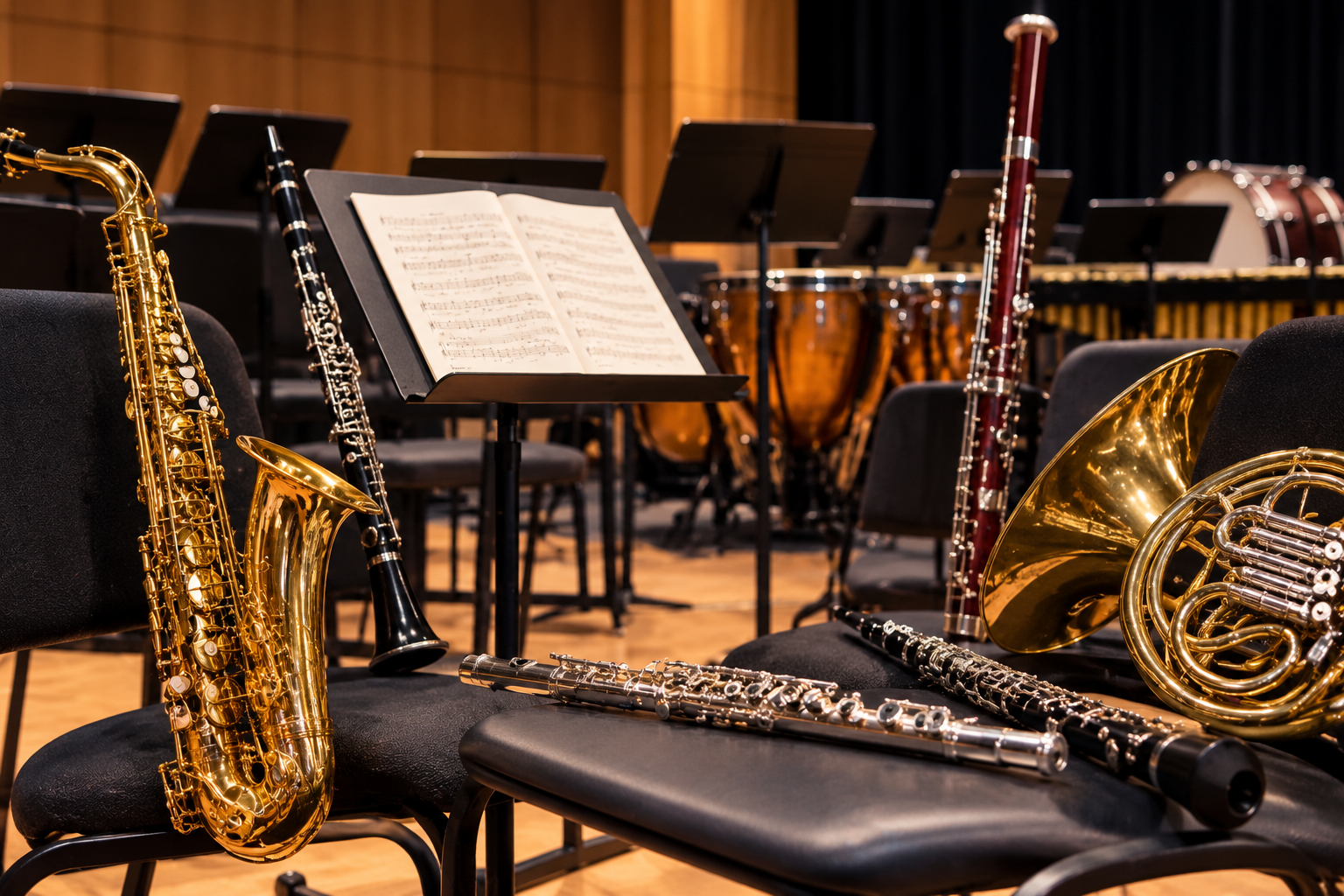
A wind ensemble is a concert group made up mainly of woodwind and brass instruments, along with percussion. Each section has a clear part, yet all sections work together to create one complete sound.
What Instruments Are in a Wind Ensemble?
A wind ensemble can include a wide range of instruments. Each one adds a different sound, pitch, or texture to the music. The exact group can change based on the piece being performed.
Common instruments include:
- Flutes, piccolos, oboes, and bassoons
- Clarinets and saxophones
- Trumpets, French horns, trombones, and tubas
- Percussion instruments, with piano or double bass used in some works
Woodwinds can carry smooth melodies and quick musical lines. Brass instruments can add depth and power. Percussion brings rhythm, accents, and energy to the performance.
How Does Wind Ensemble Music Sound?
A wind ensemble can produce many different sounds. One section may play a soft melody while another adds harmony. Brass can create a bold sound, while woodwinds can add lighter and more detailed parts.
For new listeners, a wind ensemble can be understood by hearing how these sections work together. The music can move from quiet passages to strong musical moments. It can also use changes in rhythm, volume, and texture to keep the performance interesting.
What Music Can a Wind Ensemble Perform?
Wind ensembles perform many types of music. Their programs can include classical works, new compositions, arrangements, and pieces written for specific groups. Roger Briggs has created music for wind ensemble as part of his wider work as a composer.
His catalog includes Boogie & Blues and Catenation. He also wrote Concerto for Saxophone Quartet and Wind Ensemble, which brings a saxophone quartet together with a larger wind group. These works show how composers can use different instruments to create new sounds and musical ideas.
Why Commission Contemporary Music?
Ensembles can commission contemporary music when they want a new work created for their performers or concert plans. A commission gives a composer the chance to write music for a specific group, idea, or set of instruments.
New works can also bring fresh choices to concert programs. Musicians receive original material to study and perform. Listeners get a chance to hear music written for the present day.
How Does a Wind Ensemble Performance Come Together?
Good performances need careful practice and close listening. Every musician must know their part while also paying attention to the rest of the group.
Rehearsals may focus on:
- Keeping the same tempo and rhythm
- Balancing loud and soft sounds
- Matching tone across different instruments
- Shaping melodies and musical phrases
The conductor guides the group through these details. Musicians then use their skills to turn the written score into a complete performance.
What Makes Roger Briggs’ Music Worth Exploring?
Roger Briggs has written music for several types of performers, including wind ensembles, chamber groups, orchestras, vocal groups, and solo instruments. His work gives listeners a chance to explore modern classical music through different sounds and group sizes.
For those interested in commissioning contemporary music, his catalog also shows how composers can create works for specific instruments and larger performing groups.
FAQs
1. What is a wind ensemble made of?
A wind ensemble mainly includes woodwind and brass instruments, along with percussion. The group may also use piano or double bass for certain pieces. Its exact setup depends on the needs of the music being performed.
2. How is a wind ensemble different from an orchestra?
A wind ensemble mainly uses woodwinds, brass, and percussion. An orchestra has a large string section along with woodwinds, brass, and percussion. Each group offers composers different sounds and ways to build music.
3. Can a wind ensemble perform modern music?
Yes. Wind ensembles can perform both older works and new compositions. Modern pieces may use unusual rhythms, new sounds, and different instrument combinations. These works give performers fresh material and audiences new music to experience.
4. Why do composers Commission Contemporary Music?
A commission gives composers a chance to create a new piece for a particular group or project. It can also give musicians original music designed around their instruments, skills, concert plans, and creative goals.
5. What wind ensemble works has Roger Briggs written?
His catalog includes works such as Boogie & Blues, Catenation, and Concerto for Saxophone Quartet and Wind Ensemble. His wider catalog also includes chamber, orchestral, vocal, choral, and keyboard music.
Explore Roger Briggs’ Music
Discover music created for wind ensembles, chamber groups, orchestras, and other performers. Explore Roger Briggs‘ work to learn more about contemporary classical composition and the many sounds composers can create with different instruments.